Background Paper and National Stakeholder Dialogue on Private Sector engagement in Climate Actions: Focus on Private Sector Investment in AFOLU Sector
- Project Duration: 2021-2022
- Location: Bangladesh
- Client: Food and Agriculture Organization (FAO)
- Position: Climate Change Specialist, Climate Finance Specialist
The government of Bangladesh has been working on climate change adaptation for a long time to combat the adverse impacts of climate change. However, it has become clear that public resources will not suffice to meet countries’ climate adaptation needs, and private sector investment will be critical to closing the adaptation funding gap (UNEP, 2018). In Bangladesh, businesses are engaged in different sectors like Agriculture (including crops, agro-forestry, fisheries and livestock), Forestry and Other Land Use (AFOLU), energy, industry, waste management, water, etc. In addition, many private organizations are working individually or under public-public partnerships with the government.
The focuses of the assignment were: to identify the potential private sector, particularly MSMEs for mitigation and adaptation in AFOLU; develop an analytical framework and approach for engaging the private sector in mitigation, capacity building and accessing global funds by the private sector for promoting climate-smart agriculture through enhanced mitigation actions in AFOLU and thus contribute to achieving NDC targets and Paris Climate Agreement. The focus of the private sector can be geared towards economically viable, environmentally sustainable, and financially rewarding projects that have significant potential to impact people’s livelihoods, such as climate-resilient agriculture, efficient power generation and transmission, waste management, water supply and sanitation, etc. while generating profits. Moreover, past and current assessments of private sector engagement in climate actions and investments in Bangladesh reveal several barriers such as a lack of awareness and motivation among the private sector actors and stakeholders, knowledge and information gaps, Weak financial markets, capacity constraints and policy/regulatory environment, etc.
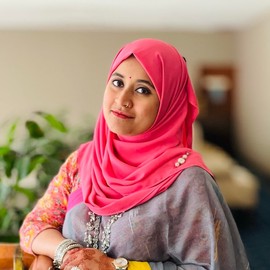
Jarin Tasneem Oyshi
Associate Project Officer
I am a passionate environmental engineer with a multidisciplinary background, specializing in climate change adaptation and mitigation, environmental management, and sustainability.